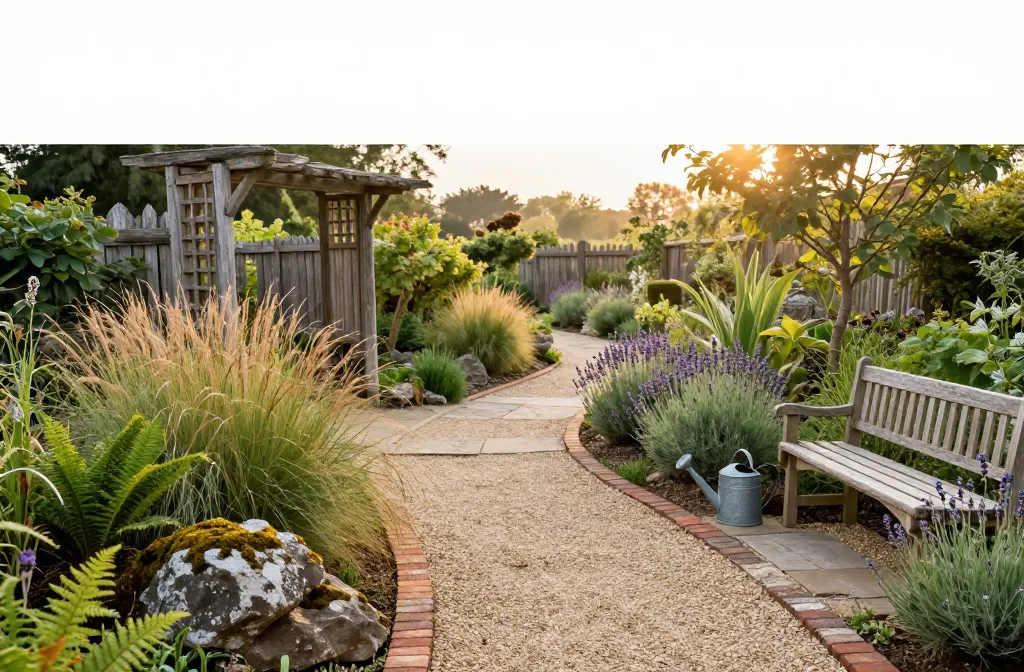
Steal These 10 Rustic Landscaping Secrets Designers Use for That Effortless Country Look
You want that dreamy, just-strolled-through-the-countryside vibe without turning your yard into a high-maintenance project. Good news: designers have a playbook, and it’s surprisingly simple. These secrets lean into texture, timeworn charm, and plant choices that basically thrive on kindness and occasional neglect. Ready to make neighbors wonder if you hired a pro? Let’s dig in.
1. Start With Bones: Craft A Laid-Back Structure
Tired of snacking when you’re not even hungry? This reset helps you stop the loop and feel back in control.
A simple reset for moments when cravings take over. Easy to use, easy to repeat, and designed to help you feel satisfied instead of stuck.
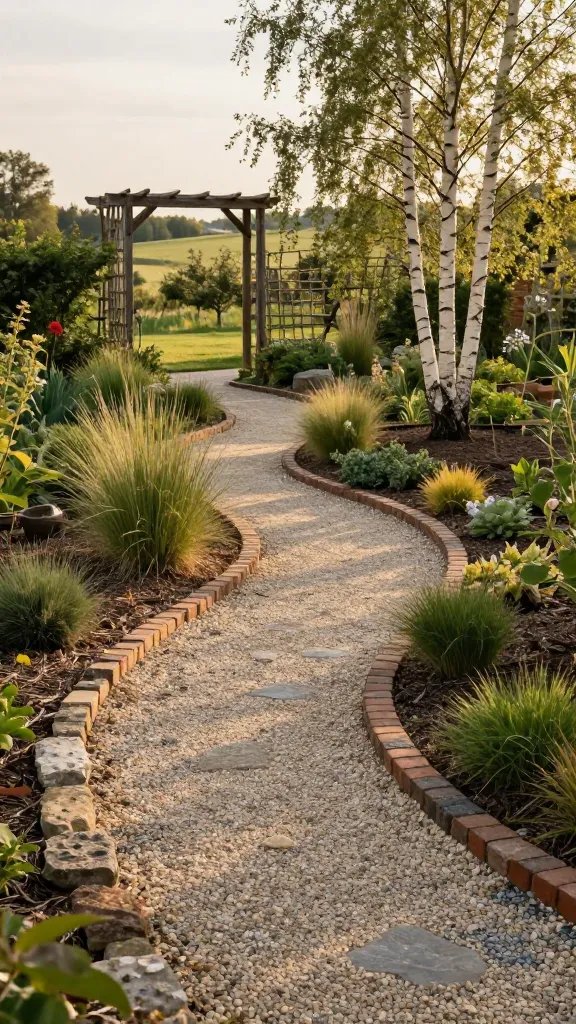
Rustic landscaping looks “effortless” because the structure quietly does the heavy lifting. Designers begin with simple, natural lines that guide the eye and create flow. Think gentle curves, asymmetry, and materials that already feel like they belong outdoors.
Key Moves:
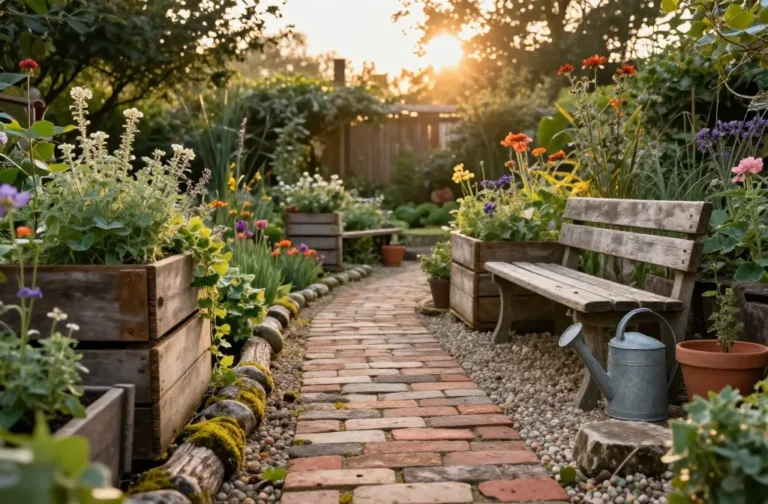
- Define pathways with crushed granite, pea gravel, or wood chips.
- Use rough-hewn edging like reclaimed brick or fieldstone.
- Create sightlines: frame views with small trees or a trellis.
Build the framework first, then let everything else drape over it. You’ll get a cohesive look that stays charming even when life (and weeds) happen.
2. Mix Textures Like A Woodland Stylist
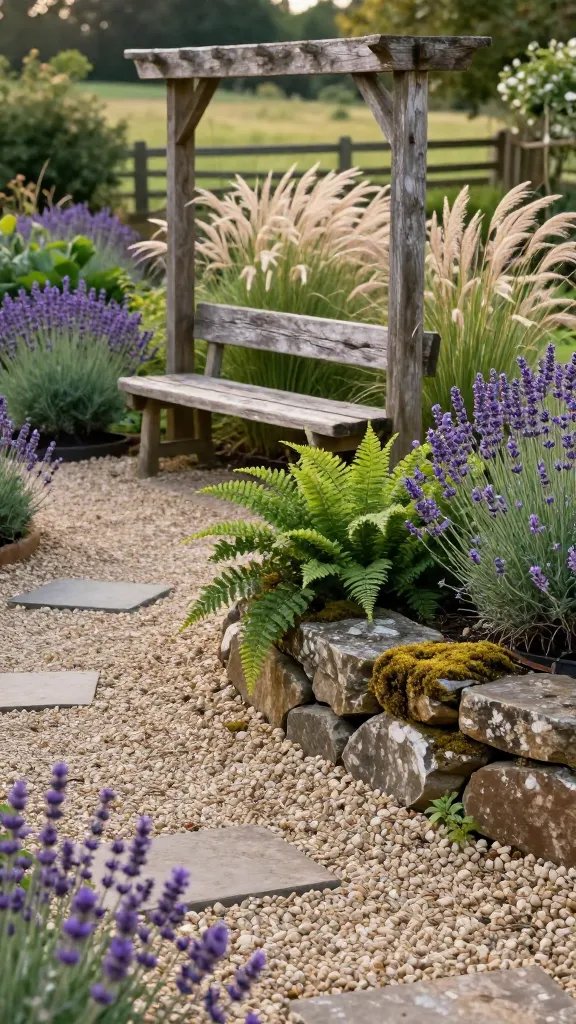
Rustic design thrives on contrast—soft next to rugged, airy against solid. Designers layer textures to create depth that looks organic, not overdesigned. It’s visual comfort food for your yard.
Transform Your Home With 7,250+ Stunning Landscaping Designs—No Expensive Designers Needed!
- 🌿 Access 7,250+ stunning landscaping designs.
- 💰 Save thousands—no pro designer needed.
- 🏡 Plans for gardens, patios, walkways, and more.
- ✨ Simple, beginner-friendly DIY layouts.
- 🛠️ Customize any design to fit your yard.
Texture Pairings That Pop:
- Stone + Ferns: craggy and delicate
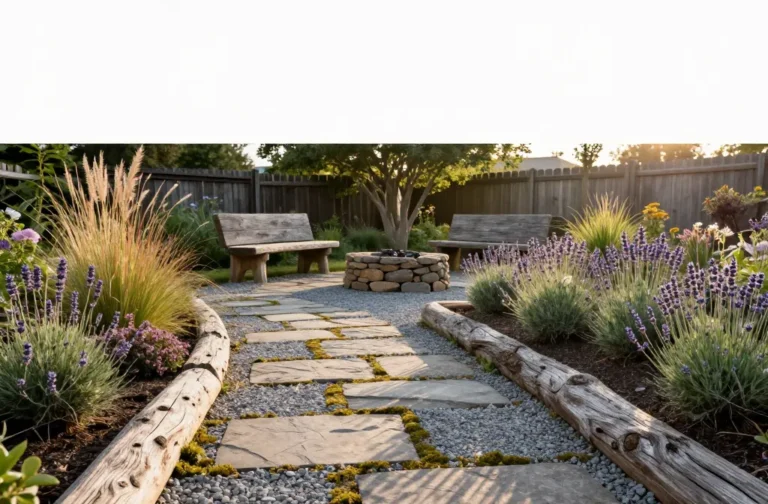
- Weathered Wood + Lavender: rough next to feathery blooms
- Gravel + Ornamental Grasses: crunchy underfoot, wispy overhead
Balance heavy elements with soft plantings to avoid a bulky look. You’ll get that unfussy, layered charm designers chase.
3. Choose Plants That Love Neglect (Within Reason)
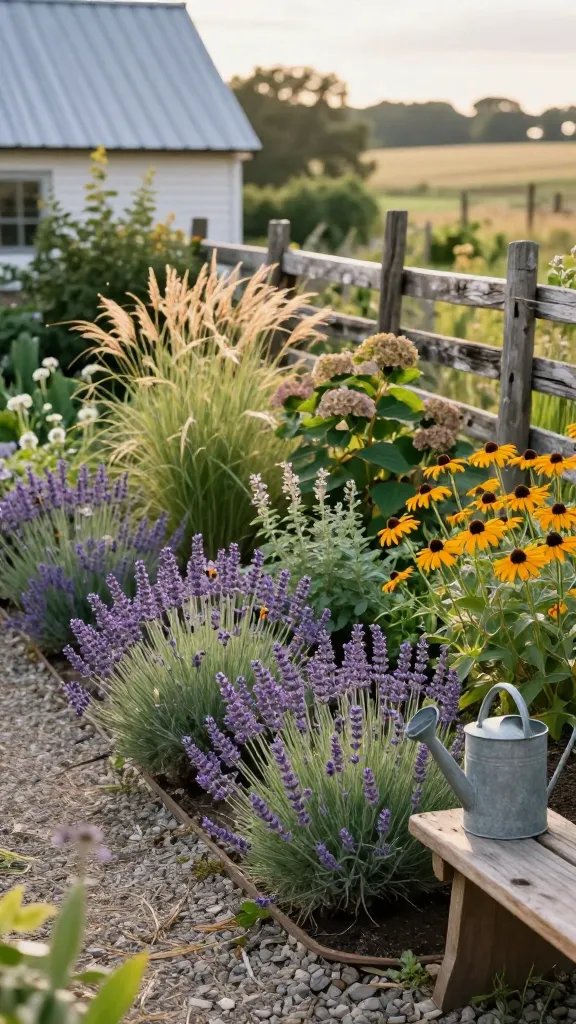
Nothing kills “effortless” faster than constant pruning and watering. Pros select unfussy perennials, native shrubs, and self-seeding annuals that handle your climate and reward you for leaving them alone.
Low-Drama Plant All-Stars:
- Lavender, catmint, and salvia for color and pollinators
- Russian sage and ornamental grasses for movement
- Hydrangeas and spirea for cottage-y fullness
- Native coneflower and black-eyed Susan for long bloom times
Group in odd numbers and plant in drifts for a natural look. Your future self will thank you when the garden still looks good after vacation.
4. Age Everything On Purpose
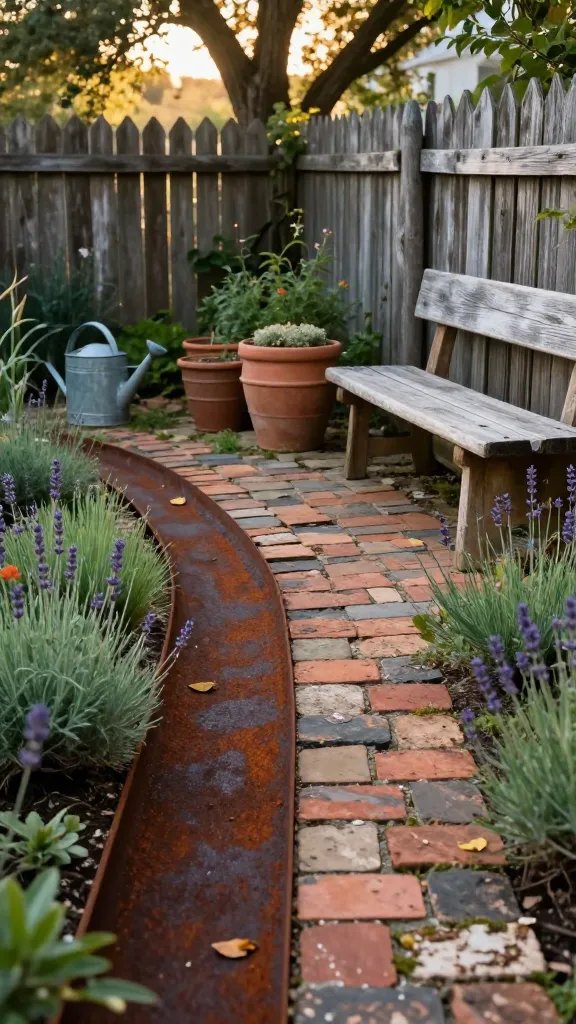
Rustic spaces look better with a little patina. Designers lean into materials that weather gracefully so your yard feels established, not brand-new and shiny. The trick? Choose finishes that improve outdoors.
Materials That Get Better With Time:
- Corten steel edging that forms a rich rust patina
- Untreated cedar or oak that silvers naturally
- Terracotta that develops a soft mossy bloom
- Reclaimed brick with color variation and chips (the charm is built in)
Let nature do your styling. The result feels genuine and storied, not themed or fussy—seriously, it’s magic.
5. Curate Imperfection: Wabi-Sabi, But Make It Country
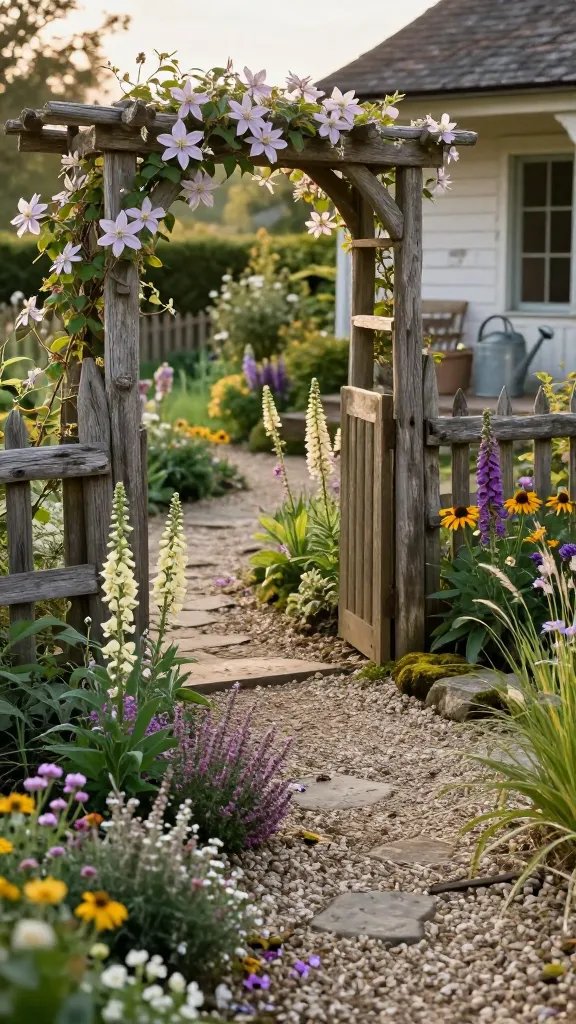
Perfectly clipped boxes scream “formal garden.” Rustic design embraces a little wildness for that lived-in feel. Designers set limits—then let plants blur the edges just enough.
Tips To Nail It:
- Loosen edges of paths with creeping thyme or sweet alyssum.
- Let vines (clematis, honeysuckle) meander across fences or arbors.
- Skip rigid spacing; stagger plants for natural variation.
This approach adds soul and movement without chaos. Use it where you want cozy, storybook vibes—front entries, patios, and around seating areas.

6. Use Found Objects Like A Designer, Not A Hoarder
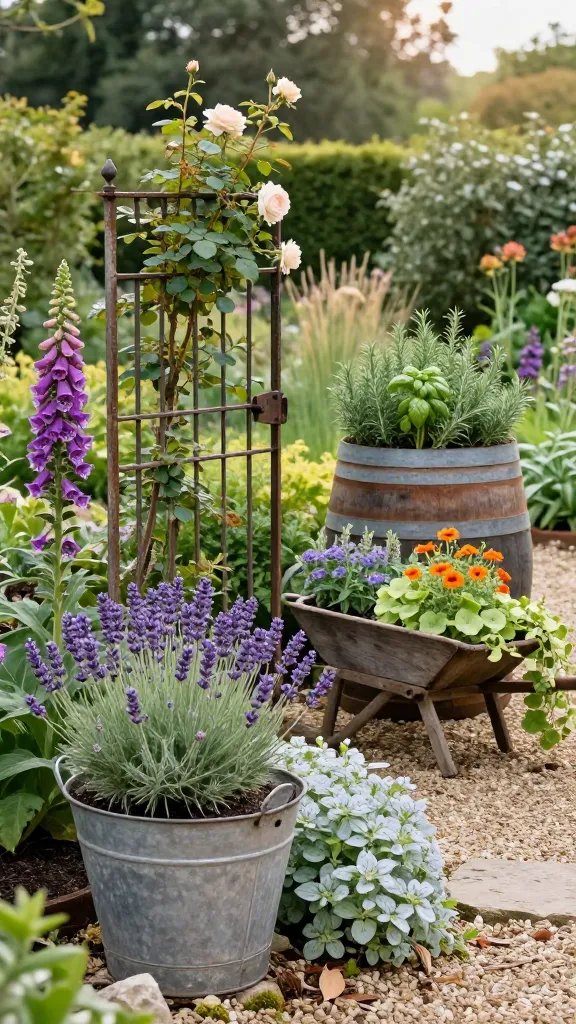
Vintage accents scream rustic when used with restraint. Pros choose a few standout pieces, then integrate them with plants so they look discovered, not staged. Less is more here, IMO.
Smart Accent Ideas:
- Old galvanized tubs as planters (drill drainage holes)
- Antique gates as trellis backs or focal points
- Whiskey barrels for herb gardens
- Worn wheelbarrows tucked into a bed with trailing plants
Treat accents like punctuation—just enough to make a statement. You get charm without turning the yard into a flea market.
7. Build Pathways That Crunch, Curve, And Invite
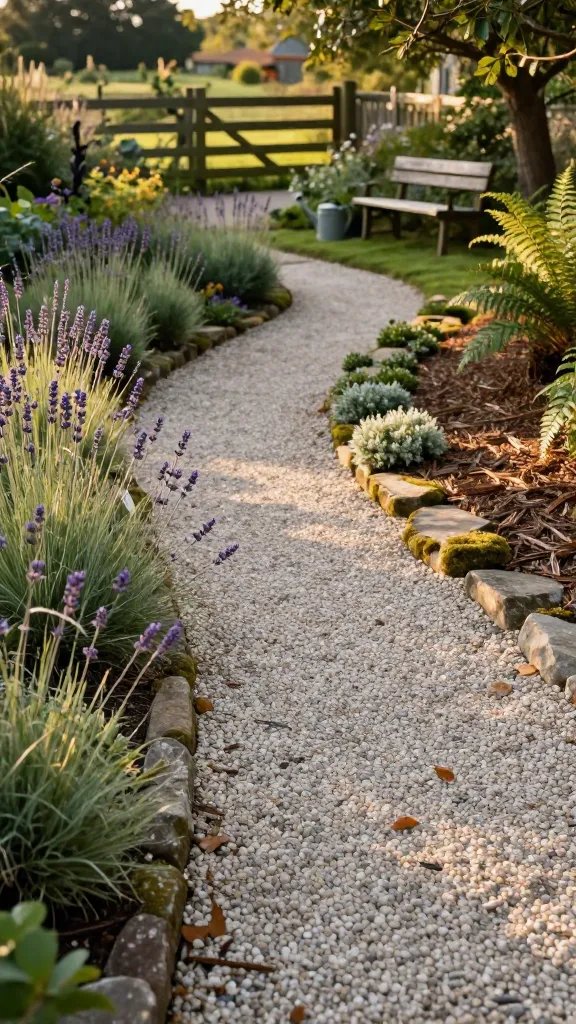
Great paths make a rustic garden feel like an adventure, not a corridor. Designers favor materials that feel tactile and informal while guiding you through the landscape.
Path Options That Win:
- Pea gravel for that satisfying crunch
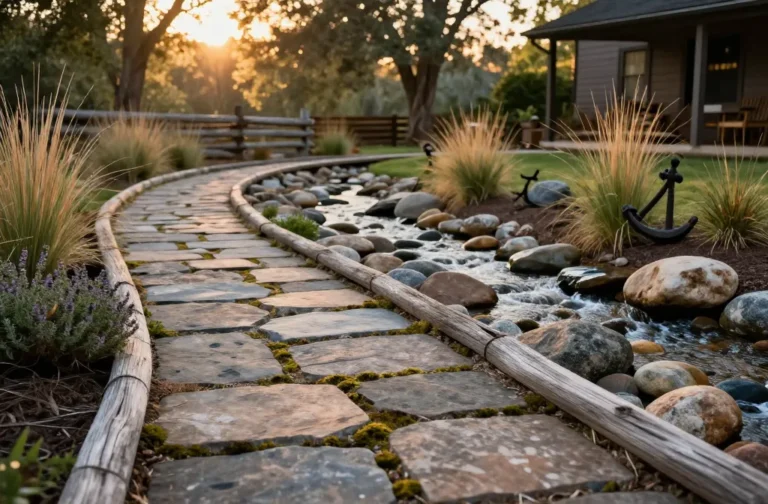
- Flagstone stepping pads set in groundcover
- Mulch or wood chips in shady, woodland areas
Add gentle curves and slight width changes for a meandering vibe. It’s functional and atmospheric, and it leads eyes (and feet) exactly where you want them.
8. Layer Heights For That “Grew Here On Its Own” Look
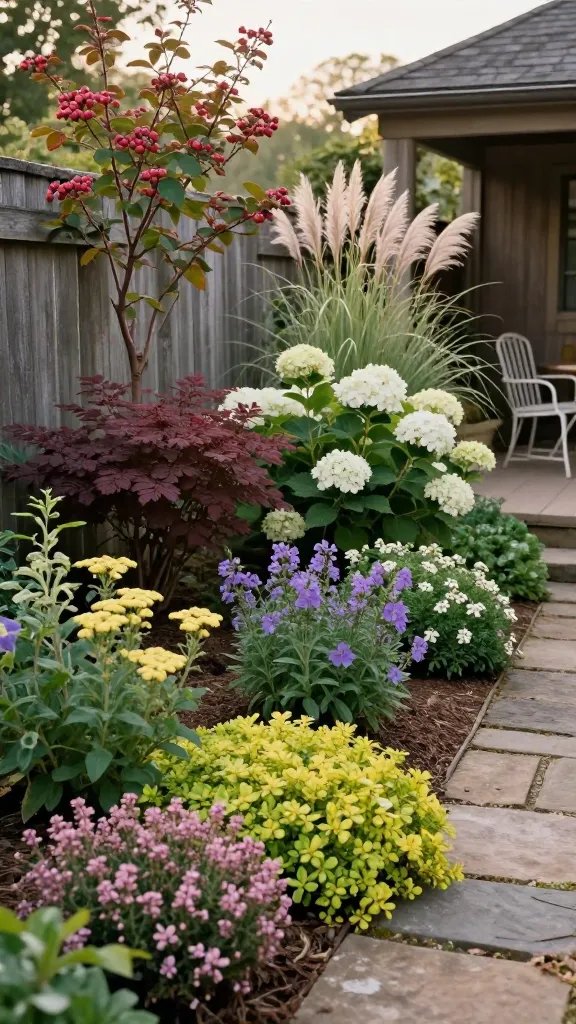
Height variation keeps rustic landscapes from falling flat. Designers stage tall, mid, and low plants so the garden feels lush from every angle—front porch to back fence.
Simple Height Recipe:
- Back: small trees (serviceberry, redbud), tall grasses (Miscanthus)
- Middle: shrubs (ninebark, hydrangea), mid perennials (phlox, yarrow)
- Front: groundcovers (thyme, creeping Jenny), low bloomers (sedum)
Use height layering along fences, house foundations, and around patios. You’ll get dimension and privacy without feeling boxed in.
9. Create Little “Rooms” With Cozy Nooks
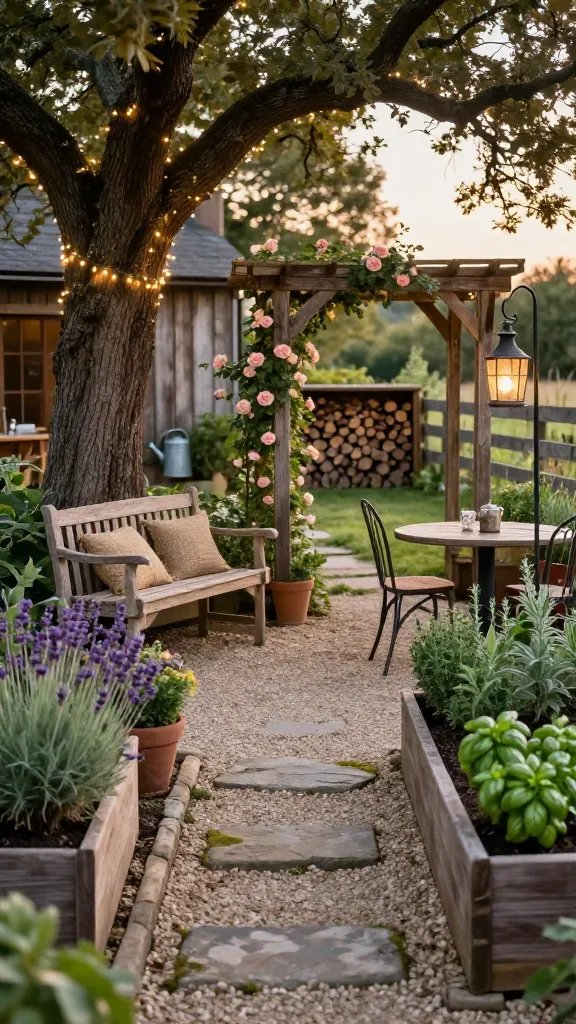
Rustic gardens feel intimate because designers carve out small spaces that invite lingering. A bench under a tree, a bistro set by a herb bed—micro-moments make the whole yard feel special.
How To Carve Nooks:
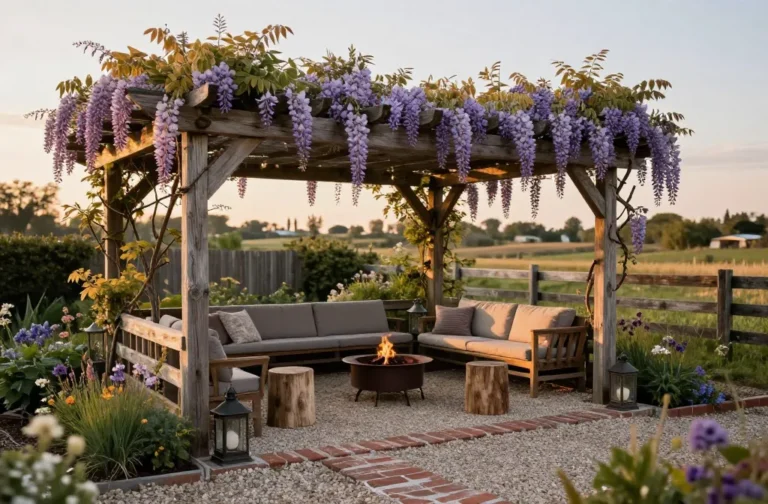
- Use a trellis or arbor to suggest an entry.
- Flank seating with containers or planter boxes for enclosure.
- Hang string lights or mount a lantern for soft glow.
Design nooks where you naturally pause—near kitchens for herbs, by sunny corners for morning coffee. High use, high joy, low effort.
10. Water Features That Whisper, Not Shout
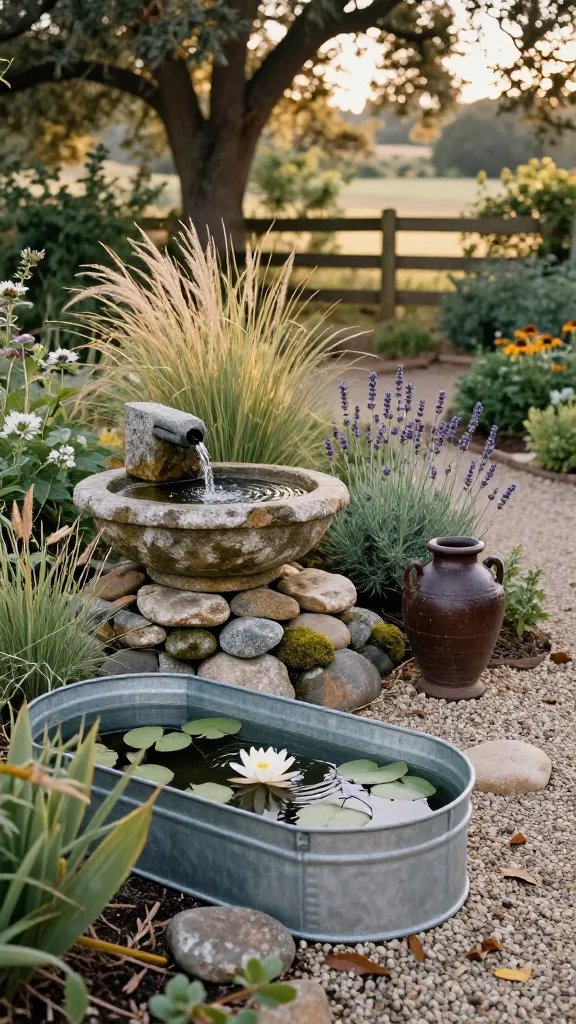
Rustic landscapes love subtle water sounds that blend with birdsong. Designers choose pieces that look like they could’ve been there for ages—simple, stone-heavy, and low maintenance.
Chill Options:
- Stone basin fountain with a hidden recirculating pump
- Galvanized trough turned into a pond with water lilies
- Bubbling urn nestled in gravel with surrounding grasses
Keep the scale modest and the materials natural for instant serenity. It adds life, cools the space, and draws pollinators—trust me, it’s worth it.
1. Soil And Mulch: The Unsexy Secret To Lushness
Designers obsess over soil because healthy dirt equals happy plants. Rustic gardens benefit from rich, well-draining beds and mulch that ties everything together visually.
What Pros Do:
- Amend with compost and leaf mold for structure.
- Top with shredded bark or aged wood chips for moisture and weed control.
- Use gravel mulch around drought lovers like lavender.
Good soil means fewer plant casualties and more growth with minimal fuss. Not glamorous, but it’s the backbone of “effortless.”
2. Color Palette: Muted, Moody, And Meadow-Inspired
Rustic doesn’t chase neon. Designers stick to dusty hues, soft whites, smoky purples, and greens on greens. The palette calms the eye and makes spaces feel cohesive.
Palette Cheat Sheet:
- Blooms: cream, mauve, rosy pink, indigo, dusty blue
- Foliage: blue-green, silvery sage, deep forest
- Hardscape: warm stone, aged wood, charcoal metal
Repeat colors across beds and containers for instant harmony. Your garden will look curated even when it’s a little wild—FYI, that’s the goal.
3. Lighting That Flatters, Not Blasts
Rustic nights want glow, not glare. Designers use warm, low-level lighting to trace paths, highlight textures, and make nooks feel magical.
Lighting Ideas:
- Downlights tucked into trees for moonlight vibes
- Stakes along gravel paths to guide feet
- Lanterns and string lights in seating zones
Choose 2700K warm LEDs and keep fixtures understated. You’ll extend your garden’s life into the evening without turning it into a runway.
4. Fences And Gates With Storybook Charm
Boundaries set the rustic tone before plants even show up. Designers lean on simple, tactile materials and silhouettes that nod to countryside tradition.
Winning Combos:
- Split-rail fences with wildflower drifts
- Board-and-batten with a climbing rose or clematis
- Reclaimed gate as a focal entry with thyme underfoot
Keep finishes matte and hardware old-school. Instant character, better privacy, and prime trellis real estate.
5. Containers: Go Big, Go Weathered, Go Grouped
Rustic containers look substantial and timeworn. Designers choose large-scale pots and cluster them for impact that reads cozy, not cluttered.
Container Strategy:
- Use terracotta, zinc, or aged concrete.
- Group in threes with varied heights.
- Plant thriller-filler-spiller with herbs, trailing thyme, and upright grasses.
Great for patios and porches where you want instant charm and flexibility. Move them around like furniture until the vibe hits just right.
6. Edible Meets Ornamental (Because Why Not?)
Designers sneak edibles into rustic beds for texture and usefulness. You get a kitchen garden without the rigid rows—form meets flavor.
Edibles That Look Pretty:
- Rainbow chard and kale for sculptural leaves
- Strawberries as groundcover
- Rosemary and sage for fragrance and structure
Tuck edibles near seating for quick harvests. Practical, delicious, and it just feels wholesome.
7. Seasonal Flow: Plant For The Long Game
Rustic gardens shine across seasons because designers plan staggered interest. If something fades, something else steps up. No dead zones, no boredom.
Seasonal Highlights:
- Spring: bulbs, hellebores, flowering trees
- Summer: daisies, hydrangeas, herbs
- Fall: asters, grasses, seed heads
- Winter: evergreen structure, bark, and silhouettes
Layer bloom times and keep seed heads for birds and texture. You’ll love how the garden evolves month to month—seriously satisfying.
8. Rain-Friendly Design That Looks Intentional
Designers manage water in ways that look like part of the plan. Rustic means earthy solutions: swales, gravel, and thirsty plantings that slurp up runoff.
Storm-Savvy Moves:
- Direct downspouts to a rain garden with natives.
- Use permeable paths to reduce puddling.
- Edge beds with river rock to slow and filter water.
Form meets function, and your yard stays mud-free. Bonus: fewer lawn issues and happier plants.
9. Keep The Lawn Small (Or Skip It)
Big lawns don’t scream rustic—they whisper maintenance bills. Designers shrink grass areas and trade them for beds, meadows, or gravel courts that look charming and save time.
Lawn Alternatives:
- No-mow fescue that waves in the breeze
- Microclover for soft, green, drought-friendly carpets
- Gravel courtyard with potted olives or lavender
Less mowing, more lounging. Your weekends just got a glow-up.
10. Keep It Real: Edit, Don’t Overhaul
Rustic style thrives when you work with what you have. Designers edit yards season by season, adding, subtracting, and letting time do some of the styling.
Easy Maintenance Rhythm:
- Quarterly edits: remove what flops, divide what thrives.
- Top-dress beds with compost once a year.
- Refresh gravel and re-edge paths as needed.
Small, steady tweaks beat one giant makeover. Your garden will feel authentic, not staged—and it’ll stay that way.
Ready to roll up your sleeves? Pick two or three secrets and start small—an inviting path here, a cozy nook there, and some low-drama plants to tie it together. Before long, you’ll have that effortless country look… minus the hay in your hair.