13 Rustic Landscaping Ideas with Mulch for a Clean, Natural Finish That Wow
Want that cabin-in-the-woods charm without the maintenance nightmare? Mulch is your secret weapon for a clean, natural finish that still feels wild. These ideas are easy to pull off, look ridiculously good, and help your plants thrive. Ready to turn your yard into a rustic retreat you’ll actually brag about?
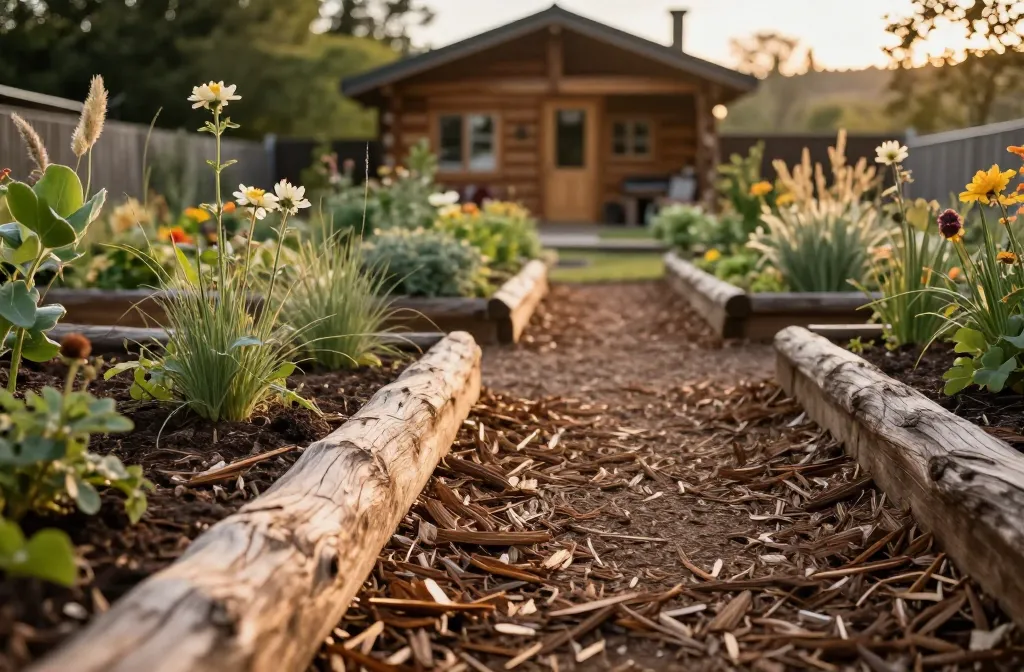
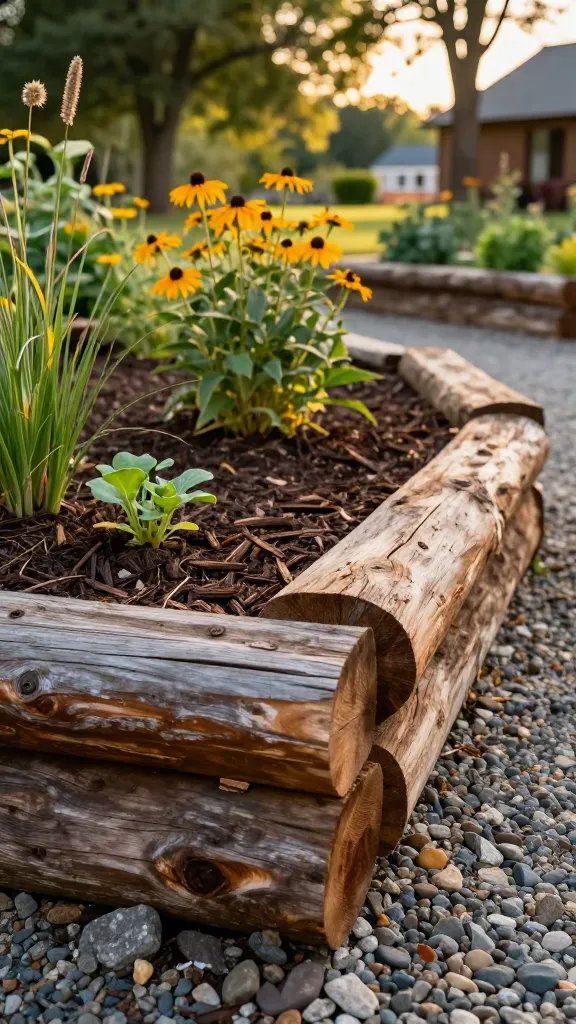
1. Frame Beds With Chunky Log Edging
Tired of snacking when you’re not even hungry? This reset helps you stop the loop and feel back in control.
A simple reset for moments when cravings take over. Easy to use, easy to repeat, and designed to help you feel satisfied instead of stuck.
Skip the plastic edging. Rough-cut logs or split timbers deliver instant rustic cred and make your mulch beds look intentionally designed, not like a last-minute weekend project.
Why It Works
- Texture contrast between smooth mulch and rugged wood feels natural and grounded.
- Logs keep mulch neatly in place without screaming “hardware store.”
- They weather beautifully and blend with native plantings.
Use cedar, locust, or treated timbers for longevity. It’s perfect for defining flower beds, veggie patches, or pathways with a warm, woodland vibe.
2. Mix Mulch Colors for Subtle Depth
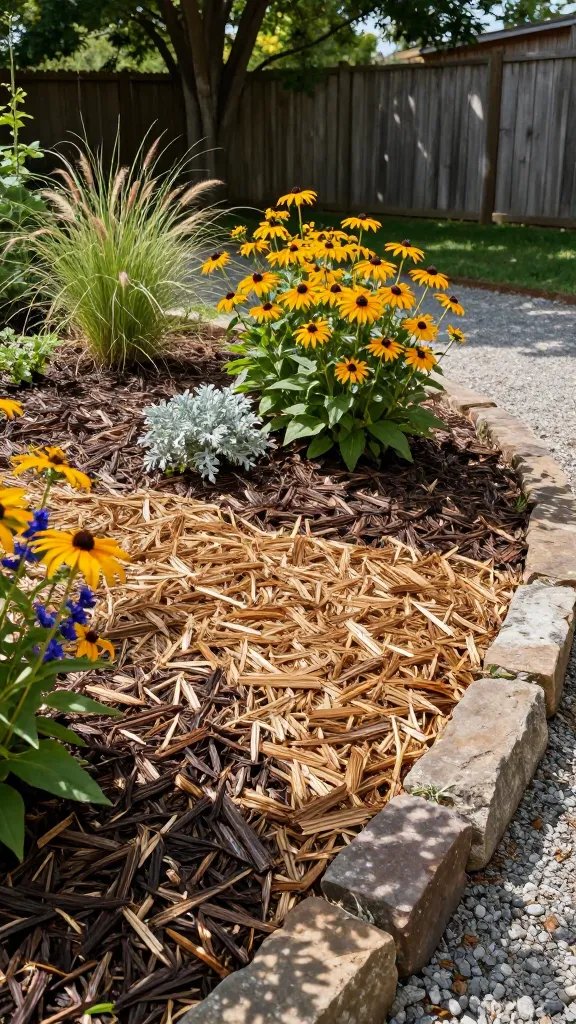
One-color mulch can look flat. Layer tones—like natural brown with a touch of dark hardwood—to mimic forest floor richness and make foliage pop.
Transform Your Home With 7,250+ Stunning Landscaping Designs—No Expensive Designers Needed!
- 🌿 Access 7,250+ stunning landscaping designs.
- 💰 Save thousands—no pro designer needed.
- 🏡 Plans for gardens, patios, walkways, and more.
- ✨ Simple, beginner-friendly DIY layouts.
- 🛠️ Customize any design to fit your yard.
Tips
- Keep it to two hues max so it still looks cohesive.
- Use darker mulch under bright blooms to make colors sing.
- Refresh the top layer only to maintain dimension, not the whole bed.
This trick adds sophistication without extra plants or hardscape—great for low-effort, high-impact beds.
3. Create Winding Mulch Paths With Crunchy Gravel Edges
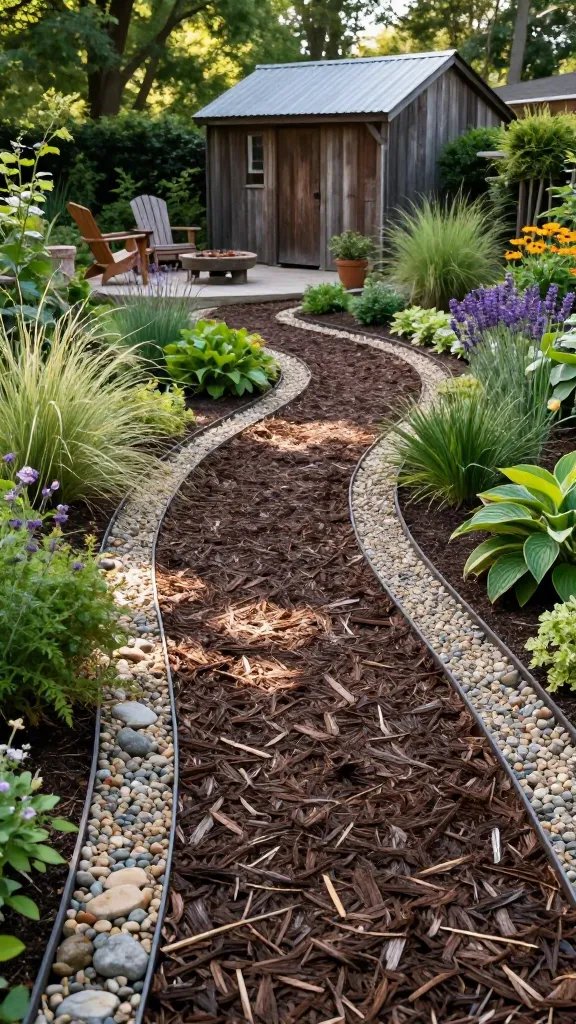
Curvy paths feel charming and intentional. Mulch makes the walking surface soft and quiet, while pea gravel or river rock edges keep it tidy and cottage-like.
Materials
- Shredded bark mulch (less slippery than chips)
- Steel or natural stone edging
- Pea gravel or small river rock for borders
Use it to connect patios, sheds, or fire pits. It reads “storybook garden,” but it’s super practical for draining and low maintenance, FYI.
4. Build a Mulch-and-Boulder Rain Garden
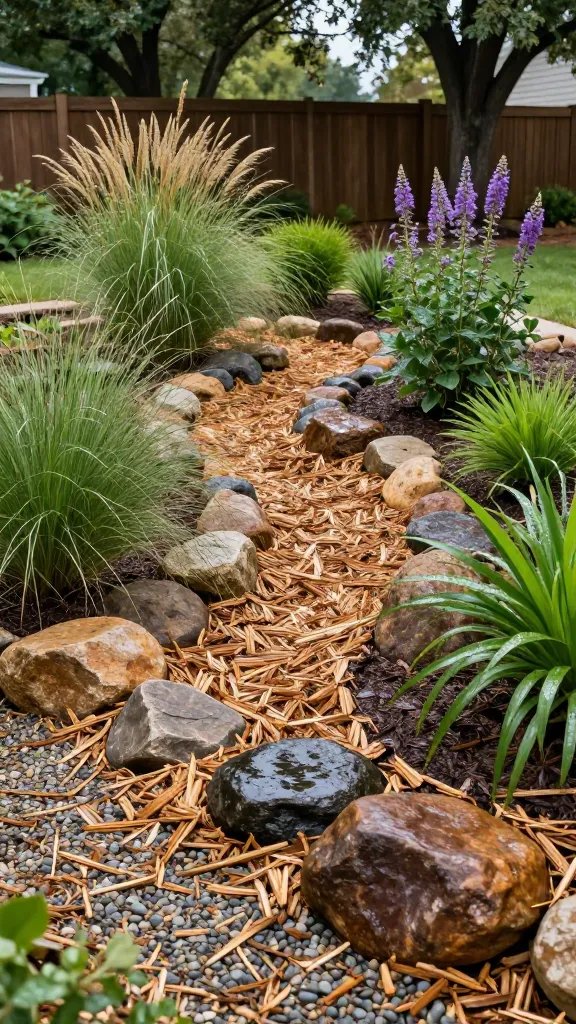
Got a soggy corner? Turn it into a rustic feature that actually manages water. Mix coarse mulch with native grasses and nestle in medium boulders.
Key Points
- Mulch slows runoff and protects soil.
- Boulders create visual anchors and reduce erosion.
- Choose plants like switchgrass, joe-pye weed, or sedges.
It handles heavy rains while looking like a natural hillside. Form and function—chef’s kiss.
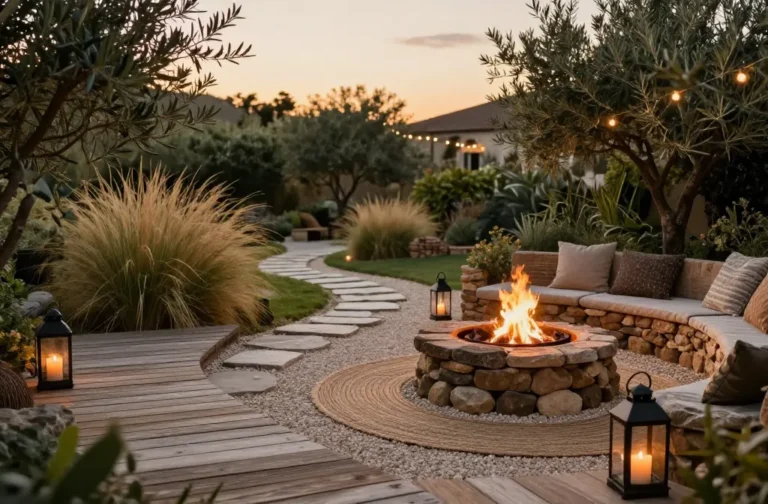
5. Define a Fire Pit Zone With Charcoal Mulch
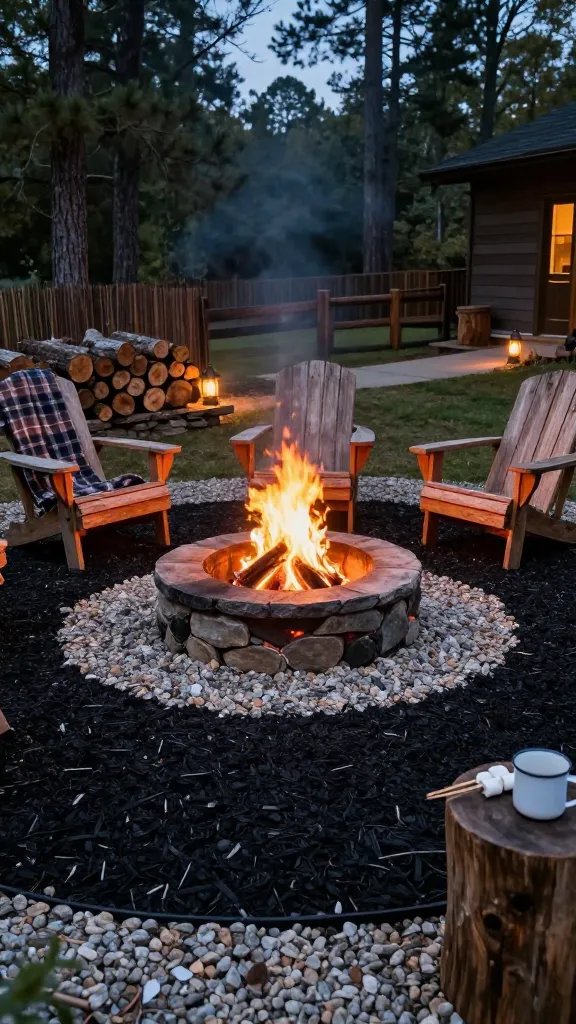
Want drama without going modern-minimalist? Use dark mulch around a stone fire pit. It hides ash, sets off the flames, and makes Adirondack chairs look extra cozy.
Safety Note
- Keep a stone or gravel buffer around the pit itself.
- Use seasoned hardwood mulch and maintain a tidy, debris-free zone.
This gives your backyard a camp-lodge feel, great for smores season and late-night hangs.

6. Layer a Woodland Understory With Shredded Bark
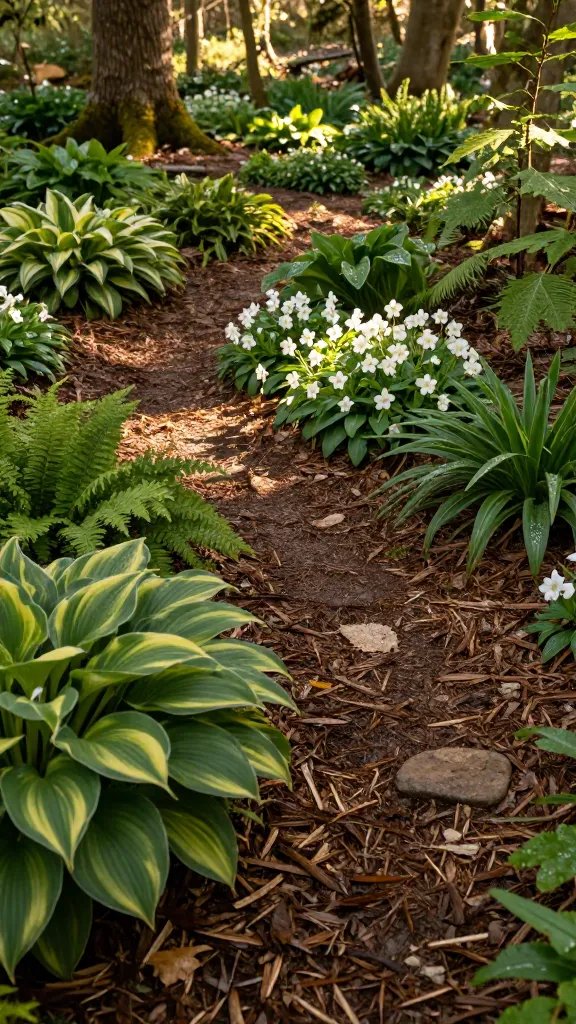
Under mature trees, turf struggles. Shredded bark mulch plus shade lovers like hosta, ferns, and hellebore create an easy-care woodland floor that feels right at home.
Plant Pairings
- Ferns for texture
- Hostas for bold leaves
- Foamflower and wild ginger for groundcover
This approach reduces weeding, saves water, and turns dead zones into magical nooks. Seriously, it’s a mood.
7. Mulch Swales With Native Grasses for Prairie Vibes
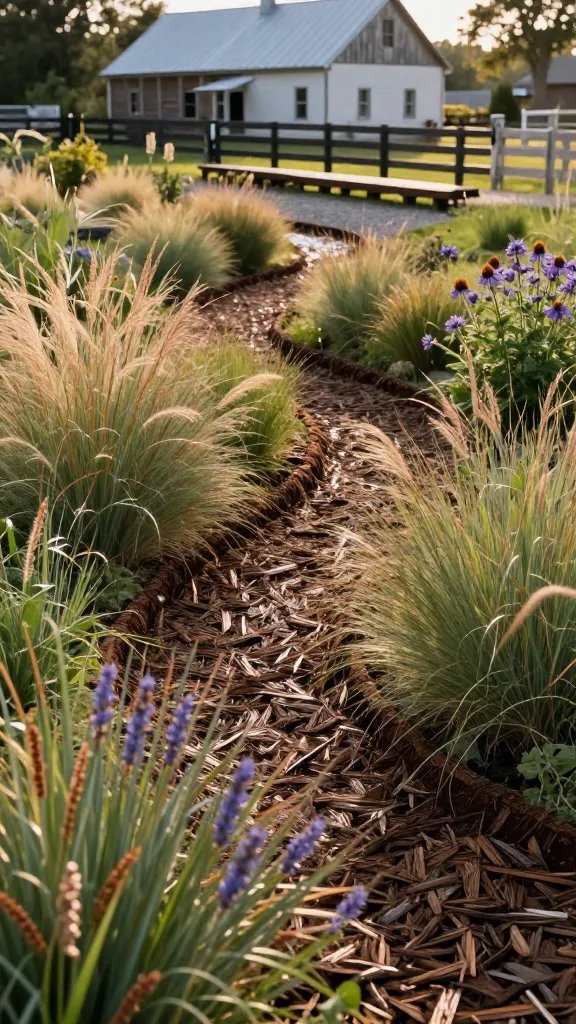
Got a gentle slope? Carve shallow swales and mulch them to guide water. Plant native grasses along the edges for a wild, field-meets-farmhouse aesthetic.
Why You’ll Love It
- Improves drainage and reduces erosion.
- Low-maintenance once established.
- Looks like nature did the design work.
Think little bluestem, prairie dropseed, and coneflowers. You’ll attract pollinators and compliments, IMO.
8. Use Wood Chips in the Veggie Garden (The Smart Way)
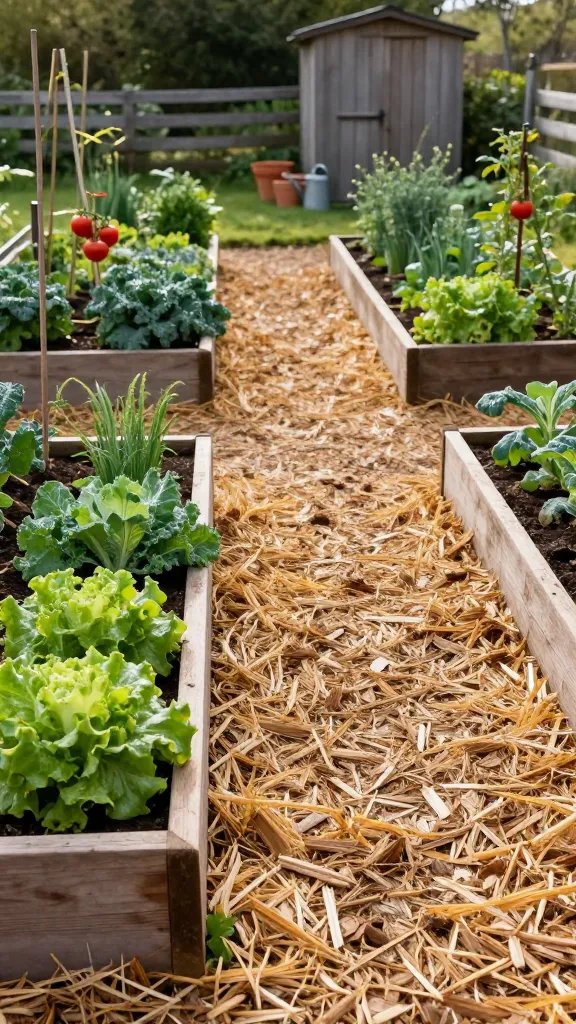
Mulch in the veggie patch keeps paths neat and roots happy. Use wood chips on paths and straw or shredded leaves around crops for the best of both worlds.
Tips
- Keep chips off planting rows to avoid nitrogen competition.
- Refresh pathways yearly for weed suppression.
- Try a defined grid: raised beds + chip paths = clean, rustic, functional.
Perfect for tidy gardeners who still want that charming potager look.
9. Mulch Islands Around Specimen Trees
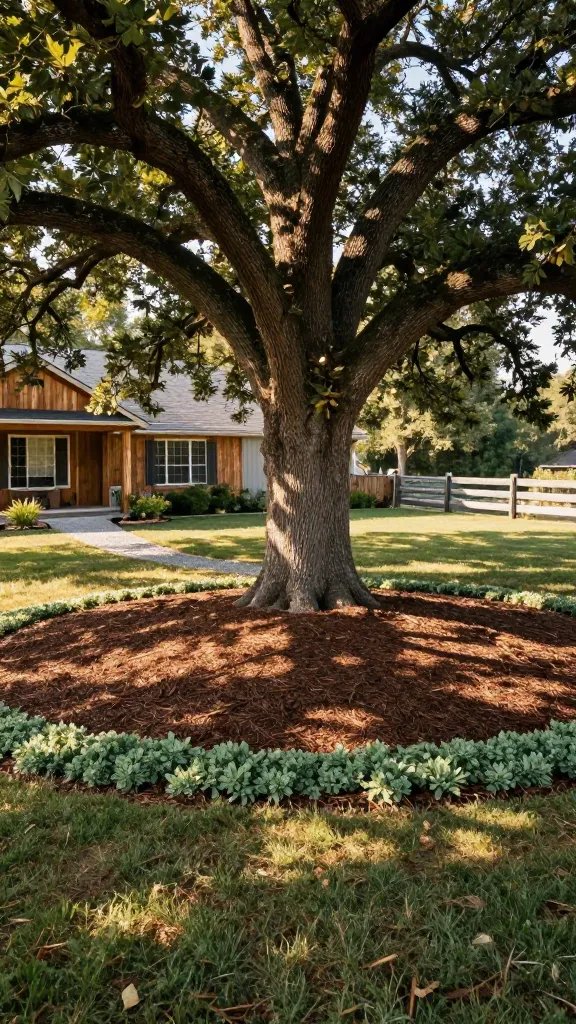
Give statement trees room to shine with circular mulch islands. It protects trunks from mower blunders and makes the canopy feel intentional and grand.
Key Points
- Widen the mulch ring to the drip line if possible.
- Keep mulch a few inches away from the trunk—no volcanoes, please.
- Add a low groundcover edge like thyme or ajuga for softness.
This looks polished and protects your investment. Your tree will thank you by not hating you.
10. Build Rustic Steps With Timber Risers and Mulch Treads
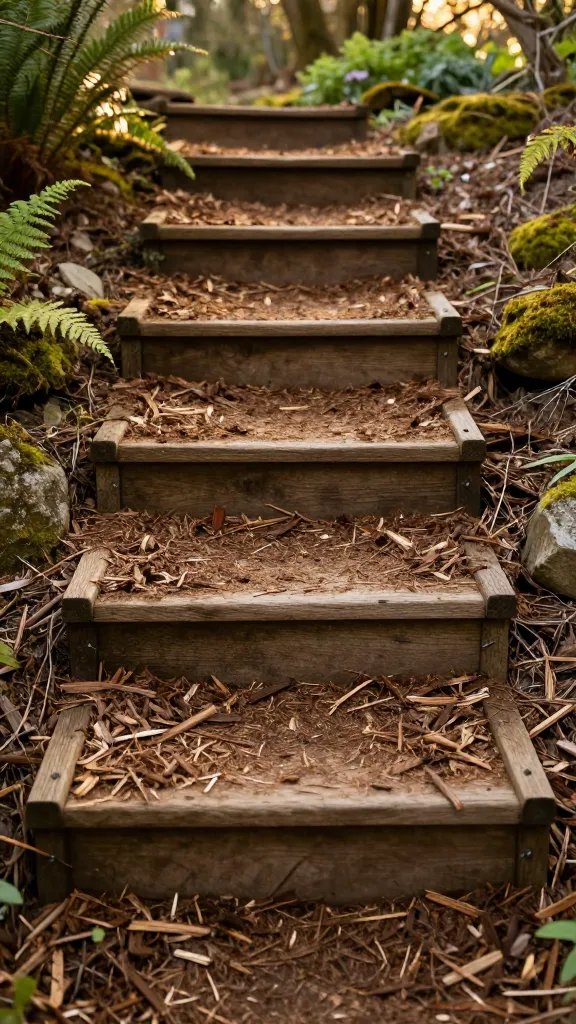
On gentle slopes, create steps using pressure-treated or rot-resistant timbers as risers. Fill treads with compacted mulch for a soft, natural climb.
Materials
- 6×6 or 4×6 timbers, rebar stakes
- Landscape fabric under treads
- Shredded mulch (chips can roll)
It’s a budget-friendly alternative to stone that blends into woodsy yards. Great for cottages or cabins where stone would feel too formal.
11. Highlight Rustic Containers With Circular Mulch Pads
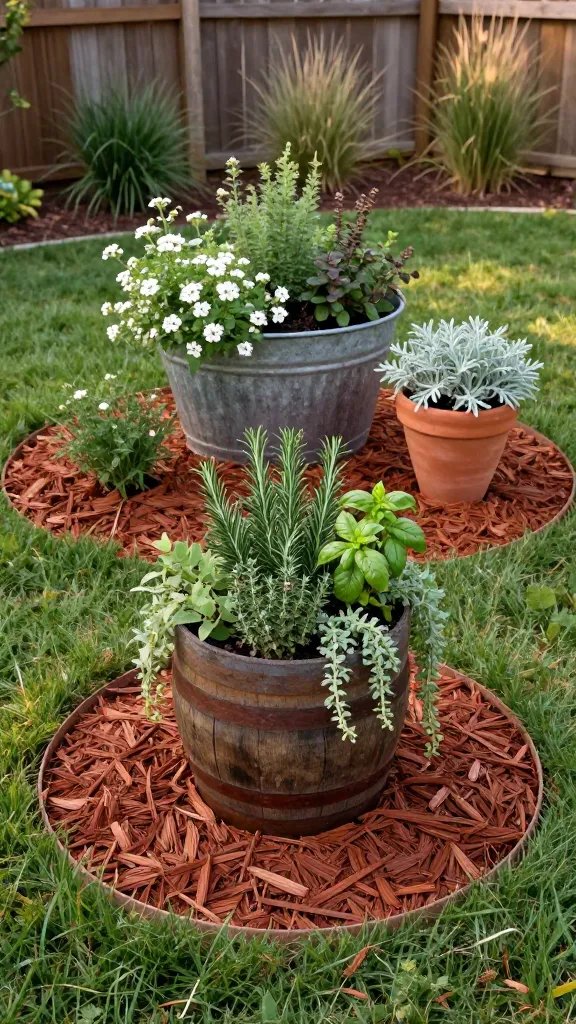
Pots look random when they sit directly on lawn. Set containers on small, round mulch pads to frame them and reduce trimming hassle.
How-To
- Cut a tidy circle with a spade, lay fabric, add 2–3 inches of mulch.
- Use cedar or cypress for longevity and color contrast.
- Group three pads together for a charming cluster moment.
Perfect for whiskey barrels, olive jars, or galvanized tubs filled with herbs and spillers. It reads thoughtful without trying too hard.
12. Edge Mulch Beds With Reclaimed Brick or Fieldstone
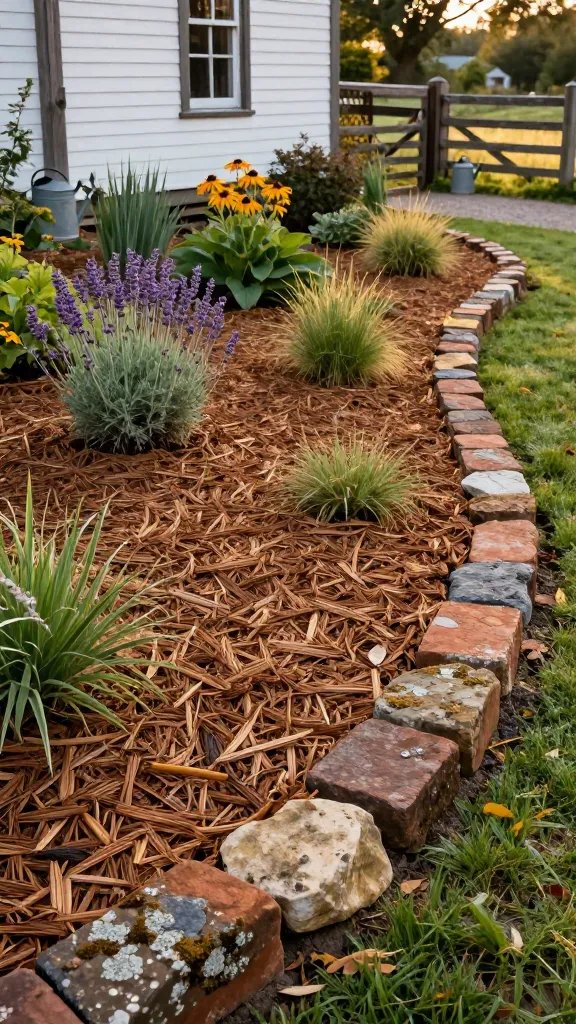
If logs aren’t your thing, reclaimed brick or fieldstone edging gives texture and history. The irregularity screams rustic while still corralling mulch like a champ.
Pro Moves
- Set stones slightly below grade to avoid mower snags.
- Mix stone sizes for a natural look.
- Pair with warm-toned mulch for a cohesive palette.
This works around cottages, farmhouses, and any landscape that wants patina over perfection. Trust me, the vibe is elite.
13. Create a Mulch Meadow With Wildflower Pockets
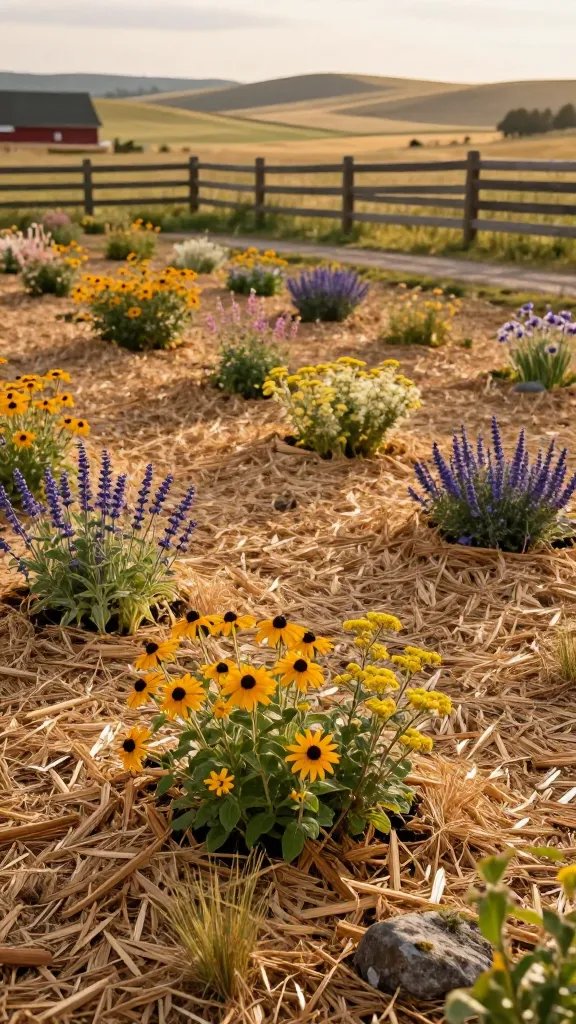
Not every inch needs planting. Spread mulch broadly, then cut irregular pockets for clusters of wildflowers and perennials—like black-eyed Susans, yarrow, and salvia.
Why It’s Awesome
- Low water, low weeding, high impact.
- Mulch acts as negative space that makes blooms stand out.
- Easy to expand or edit season to season.
This approach nails that breezy, countryside look without going full chaos. It’s flexible, beautiful, and great for large areas on a budget.
Ready to play in the mulch? These ideas keep things tidy while doubling down on that warm, rustic feel. Start small, pick a corner, and let the textures and tones do the heavy lifting—your future self (and your plants) will be very pleased.